
AI writing tools are now part of many writers' routines. They can be genuinely useful. But readers come to Parchment for human stories and perspectives, and those are the things AI cannot supply on your behalf.
Here is how to use these tools well, while keeping your writing unmistakably yours.
Where AI helps most
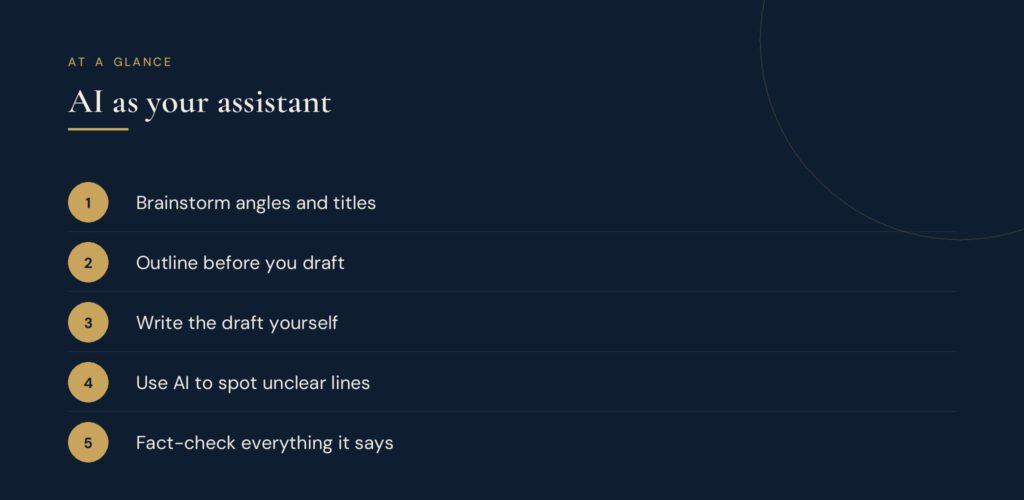
- Brainstorming: ask for ten angles on a topic, then pick the one that excites you.
- Outlining: turn messy notes into a rough structure you can rearrange.
- Editing: ask which sentences are unclear or too long, then rewrite them yourself.
- Titles: generate options, then combine the best parts into your own.
Where AI gets in the way
- Your experiences: AI does not know what happened to you, what you learned or how it felt.
- Your opinions: a story with a clear point of view is more interesting than a balanced summary.
- Facts: AI tools can state wrong information confidently. Check every fact, name and figure against a reliable source.
A simple workflow that keeps your voice
- Write down your main idea and a personal example before opening any tool.
- Use AI to brainstorm or outline if you are stuck.
- Write the full draft yourself, in your own words.
- Ask AI to point out unclear sentences or gaps, not to rewrite the whole piece.
- Edit, fact-check and read the story aloud before publishing.
Signs your story sounds too much like AI
- Every paragraph is the same length and shape.
- It uses phrases nobody says out loud, such as "in today's fast-paced world".
- There are no specific examples, names or details from your own life or work.
If you spot these, add a real example, cut the filler and say what you actually think.
Be honest with readers
You are responsible for everything you publish, including any words a tool helped with. Check the facts, credit your sources and make sure the story says what you mean.




Join the conversation
Sign in or join Parchment to respond.